Frequently Asked Questions
How do you pronounce your name?
gu-LAY-ze-in. Yes, you too can learn to say gu-LAY-ze-in, and broaden your linguistic horizons in the process. Practice saying it over and over, in the privacy of your own home. Then wait an hour, and repeat “gu-LAY-ze-in” an additional one hundred seventeen times. You should then be able to walk up to Giannis Antetokounmpo and pronounce “Gulezian” with confidence. He will be impressed.
Can you name your biggest musical influences?
Keith Jarrett. Leo Kottke. Michael Hedges. John Fahey. Son House. James Joyce. Sonoran desert summer monsoon thunderstorms. Paco. Jaco. Miles. Frank Zappa. Sun Ra. Ralph Towner. Mississippi John Hurt. Paul Motian. The songs of birds. Igor Stravinsky. Joni Mitchell. Bill Evans. John Hartford. Billy Cobham. Dick Rosmini. Alan Hovaness. Kevin Gilbert. And most of all, the sound of my mom singing when I was in her womb.
Who are your favorite guitarists?
Michael Hedges. Paco de Lucia. Leo Kottke. Jeff Beck. Jimi. Ralph Towner. Steve Tibbetts. Django. Wes Montgomery. Stevie Ray Vaughn. Frank Zappa. Pat Metheny. Julian Lage. Matteo Mancuso. Gerardo Núñez. Mike Keneally. Robin Trower. Prince. Agustín Barrios Mangoré. Al Di Meola. Derek Trucks. John McLaughlin. Vicente Amigo. B B King. Shawn Lane. Alan Holdsworth. Joe Pass. Antonio Rey Navas. Larry Carlton. John Abercrombie. Dweezil Zappa. Joe Walsh. Jan Akkerman. Phil Keaggy. Edward Van Halen. Robin Finck. Robben Ford. Joe Bonamassa. Gabor Szabo. Julian Bream. Steve Vai. Steve Howe. Tony Rice. Joni Mitchell. Henry Kaiser. Joe Satriani. Phi Yaan-Zek. Eric Gales. Albert Lee. Vernon Reid. Preston Reed. Jerry Reed. Chet. Bill Frisell. Enver Izmaylov. Jimmy Herring. A.J.Ghent. Andre Antunes. Tim Pierce. Rohan Hayes. Fareed Haque. Jennifer Batten. Marc Bonilla. John Nathan Cordy. Bill Vencil. Larry Mitchell. Frank Gambale. Scott Henderson. Hovak Alaverdian. Paolo Angeli. Raul Midon. Bola Sete. Guthrie Govan. Mateus Asato. Danny Gatton. Haig Beylerian. Steve Morse. D’Gary. Eric Johnson. Aram Bajakian. Jack Gardiner. Martin Taylor. Damian Salazar. Henry Frayne. Chanan Hanspal. Nancy Wilson. Howard Roberts. Mike Bloomfield. Vieux Farka Touré. Buckethead. Sonny Landreth. Ayhan Günyil. Robert Fripp. John Mayer. Dean Magraw. Richard Thompson. Tuck Andress. Junior Brown. William Frederick Gibbons. Jake Allen. Daron Malakian. Charlie Hunter.
Who are your favorite acoustic guitarists?
Michael Hedges. Paco de Lucia. Leo Kottke. Ralph Towner. Erik Mongrain. Son House. John Fahey. Steve Tibbetts. Pierre Bensusan. Derek Gripper. Pino Forastiere. Gerardo Núñez. Antonio Rey Navas. Andy McKee. Trevor Gordon Hall. Bruce Cockburn. Jon Gomm. Mississippi John Hurt. Vicki Genfan. Bill Mize. Vicente Amigo. Agustín Barrios Mangoré. Egberto Gismonti. Andres Segovia. Robert Johnson. Julian Bream. Calum Graham. Rainer Ptacek. Peter Finger. Peter Lang. José Fernández Torres (Tomatito). Doc Watson. Kyser George. Alex DeGrassi. John McLaughlin. Sean Watkins. Michael Kelsey. Joseph Spence. Tony Rice. Petteri Sariola. Al Di Meola. Peter Ciluzzi. Raji Malik. Alexandr Misko. Gustavo Santaolalla. Stephan Bormann. Cenk Erdogan. Kazuhito Yamashita. Molly Tuttle. Lucas Michailidis. Marc O’Connor. Preston Reed. Rob Eberhard Young. Don Alder. Antoine Dufour. Stephanie Jones. Andres Godoy. Tony McManus. Robbie Basho. Juanito Pascual. Skip James. Jaquie Gipson. Diego Del Morao. Maneli Jamal. Spencer Elliott. Thomas Leeb. Billy McLaughlin. Eric Roche. Gyan Riley. Michael Chapdelaine. Don Ross. Willy Porter. Doug Smith. Richard Smith. Laurence Juber. Larry Pattis. Chris Yacoub. Bryan Sutton. Ellen McIlwaine. Kanahi Yamashita. Dylan McKinstry. Andrew Gorny. Al Petteway. Willis Alan Ramsey. Dominic Frasca. Rachael Carlson. Kelly Joe Phelps. John Renbourne. Adrian Legg. Iain David McGeachy (John Martyn). Harry Manx. James Taylor. Andrew Lardner. Kevin Horrigan. Andreas Aase. Noa Drezner. Jorge Strunz. Yuri Naumov. Janet Noguera. Ardeshir Farah. Sharon Isbin. Peter Mulvey. Raymond Morin. Guy Buttery. Sergio Altamura. Łukasz Kuropaczewski. Tracy Moore. Shep Cooke. Vishwa Mohan Bhatt. Martin Simpson. Patty Larkin. Joscho Stephan. Billy Strings. Carles Trepat. Yvette Young. Sönke Meinen. Charlie Schmidt. Mike Dawes. Gordon Giltrap. Gimmer Nicholson. Hayden Pedigo. Janet Feder. Pete Huttlinger. And strictly (I mean STRICTLY) from a technical perspective, Tommy Emmanuel. If we include dobro players, Jerry Douglas, Jared Tyler, and Rob Ickes. And a huge shout out to ukulele monster Jake Shimabukuro!
Who have you performed with?
I get this question quite a bit. Click HERE for the info. It’s an interesting list of artists and performers.
Why don’t you do endorsements?
A lot of other guitarists do endorsements. I respect the reasons why some of them do it – they actually use the products they endorse, and believe in them wholeheartedly. For others, it’s a calculated and cynical career move, nothing more than an easy way to get their faces plastered in the pages of music magazines – cheap publicity. I look at endorsements as “career enhancing steroids.” There are moral and ethical implications for every choice we make. For me, music is a sacred calling; unfortunately, very few people in the business of “music marketing” understand what that means. I personally have made the choice to refuse any and all endorsements. I’ve also chosen never to allow any music magazine to use my name in a “reader’s poll,” and I will never participate in any “competitive” music event (the presence of judges violates the highly personal experience of listening to live music, and imposes upon artists a hierarchy which is artificial and meaningless). I am sure I’d sell more CDs / generate more downloads and steams if I did these things, but for me, it’s far more important to keep the music pure.
How do you get your tone?
High action (fret clearance), and heavy gauge strings, tuned at least a full step below concert pitch. It also helps that I play guitar a lot.
What gear do you use?
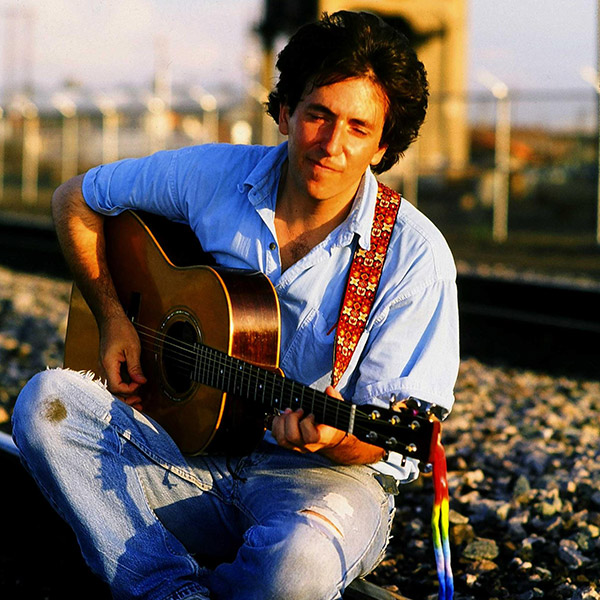
I’m in complete agreement with Chris Smither, who says, “…within limits, gear is more important as a topic of conversation than as a way of making music.” Except I’m not as diplomatic. I think gear is utterly irrelevant. Gear manufacturers spend fortunes on advertising – they want you to believe if you buy their latest digital gizmo thingy, you’ll suddenly become a vastly improved player. Well, Robert Johnson didn’t have any “gear.” Augustin Barrios didn’t have “gear.” Paco didn’t need “gear.” Nobody needs “gear” to make great music. The only gear musicians need is imagination, passion, discipline, fearlessness, humility, space, silence, reverence, a heart full of love, time, soul, guts, and callouses on their fingers.
What kind of strings do you use?
I use any 80/20 or 85/15 bright bronze alloy on hexagonal steel core. I’ll buy whatever is on sale. Brand names mean nothing to me. I always use a wound treble A string on the 12-string guitar. As far as I’m concerned, “coated” strings are an abomination from the pit of hell.
Do you sing?
Yes . I don’t have the range of Mariah Carey, or the elasticity of Bobby McFerrin, or the soulfulness of Marvin Gaye, or pipes like Sammy Hagar, or Tony Bennett, or Chris Cornell – but that doesn’t stop me from doing it. I believe everyone can, and should sing! Except maybe Ice JJ Fish – but that doesn’t stop him either! Nor should it. I’m always working on my voice. I do the best I can. So YES, I sing!
Who are your favorite bands?
Raze the Maze. Mute Math. stimmhorn. Rage Against the Machine. Tinariwen. Switchfoot. led zeppelin. Nine Inch Nails. Return to Forever. The Weepies. Primus. Kronos Quartet. Shakti. Audioslave. Take 6. Weather Report. Bela Fleck and the Flecktones. Oregon. Twelve Foot Ninja. Yes. Fishbone. Alison Krauss & Union Station. Pavement. Living Colour. Chick Corea Elektric Band. Car Bomb. That One Guy. sigur ros. Clown Core. The Wailin Jennys. tv on the radio. Helmet. Garaj Mahal. Punch Brothers. Pink Floyd. The Secret Machines. Pat Metheny Group (in any incarnation). The Bad Plus. Earth Wind and Fire. Meshuggah. SHEL. Ricky Skaggs & Kentucky Thunder. Pairdown. Crooked Still. Tool. The Del McCoury Band. Magma. AJ Lee & Blue Summit. Fear. U2. (Yeah, yeah, I know… except for the Bluegrass players, Shakti, and Kronos, they all use a lot of gear.)
Who is Michael Hedges?
Sadly, this is a question I hear more and more often. With all due respect to Leo Kottke (and Leo is due enormous respect), Michael Hedges was the most revolutionary instrumental solo acoustic guitarist who ever lived. He also was a very dear friend. Michael died tragically in an auto accident in 1997. There are tens of thousands of people – perhaps hundreds of thousands – whose lives were deeply affected by Michael’s artistry, who remember him every day – I am one among them. If you are not familiar with Michael’s music, please come back to my website later – click HERE for the link to Michael’s website.
Do you have any advice for up and coming artists, especially solo guitarists?
When I go out on tour, I’m astounded by the level of talent I see in people much younger than myself. I make it a point to be accessible, to give workshops whenever possible, and to encourage the creative spirit, because – let’s face it – the world can be a soul-grinding place, and often does everything it possibly can to stifle that sacred, beautiful impulse.
Speaking of the world, commercial pressure will change things if you want to pursue art as a career. It’s one thing to create for yourself, your family and friends – but to do it professionally… let me quote my old Takoma Records labelmate, Charles Bukowski: “If it doesn’t come bursting out of you in spite of everything, don’t do it. Unless it comes unasked out of your heart and your mind and your mouth and your gut, don’t do it. If you have to sit for hours staring at your computer screen or hunched over your typewriter searching for words, don’t do it. If you’re doing it for money or fame, don’t do it …”
So if you’re sure you’re called to be a musician, the next thing I’ll say is kill your ego. Kill it DEAD. Humble yourself before God. Music is a sacred gift; recognize the Source from Whom it comes – none of us gave ourselves our talent. Nothing is more revolting than some arrogant lame ass musician with a huge ego (not naming names here). Practice imposes humility upon musicians; if we work on the things we don’t do particularly well – which is the very definition of practice – then we’ll be coming face to face with our own weaknesses every day. I am very fortunate to know some of the greatest players in existence, and they are all genuinely humble people.
Also, recognize that although art and entertainment sometimes overlap, they are at essence two completely different things. They function separately, each one serving a different social utility. Understand exactly what it is you want to do. Search your soul, because neither path is easy, and if you stay connected to the purpose that initially motivated you, you’ll suffer less heartache later on. Read, voraciously! Do your homework. Understand the psychology – and the spirituality – of creativity. There’s a lot of literature on the subject – for me personally, the writings of Carl Jung and Joseph Campbell are a great resource.
Listen, listen, LISTEN! Everything begins with listening!!! Listen to as much music as you possibly can, but never too much of one thing. Broaden the scope of your influences. Seek out the unfamiliar, and listen! Respect artists from other traditions, with a completely different point of view. I love how musical extremes stir up the internal dialectic of our world view. When people tell me they’re into Steve Earle, I’ll tell them to listen to Saul Williams. If someone’s into Robert Randolph, I’ll turn them onto Derek Trucks, Vishwa Mohan Bhatt, Bruce Kaphan, or Sonny Landreth … or Harry Manx! I’ve directed non-improvising classical players to David Darling. I’ve turned Mozart fans onto Helmet and Tool… Keith Jarrett fans onto Conlon Nancarrow… and almost everyone onto the recent work of Trent Reznor. The list goes on and on. Music is a unified field of human expression; in this age of instant info, there’s no excuse for any serious musician to be closed off from any other musicians, from any other culture, tradition, or genre. Listen, intently, as much and as often as possible, to everything, from everywhere.
Work hard. Practice consistently over time. When the practice stops being fun – or begins to hurt – go do something else. Dance. Run. Clean the bathtub. Do something athletic. But come back to music the minute that voice starts whispering to you again. And don’t be afraid to sound like YOURSELF. It usually takes years to get there – it’s perfectly fine to show your influences, acknowledge them, and celebrate them, but the whole idea is to get on a path toward a place where the music that comes through you is immediately recognizable as YOUR music. When people see your face they know it’s you. Strive to make your music as unique and recognizable as your face.
Take ownership of what you create. COPYRIGHT YOUR WORK. The music industry has always been, and always will be littered with small-time weasels and leeches, and dominated by powerful interests that have ZERO respect for artists. That is the sad, unvarnished truth. However, LAWS exist to protect creative artists – learn about them! There’s a trove of informative articles on the subject, written in easily understandable english, here. Find and work with people who have earned your trust. Treasure them, express gratitude, and never burn bridges. No one EVER makes it solely on their own. Relationships are everything. Stay true to your soul, and defend what is yours. NEVER sign away your publishing rights – ever – to ANYONE.
The gift of music is meant to be shared; when you’re ready to share the gift, do it! Share your music with anyone / everyone who wants to hear, especially those in need. The love you radiate out to the world will come back to you in ways – and in measure – that will boggle your mind.
Be fearless. The artist’s job description excludes telling people what they want to hear; express the truth as you see it. The more you bare your soul, the more soulful your music will be. Sometimes the truth is unavoidably ugly, but try your best to express it in the context of beauty. The world does NOT need more ugliness. This quote from James Baldwin appears elsewhere on my website, but it’s worth repeating: “Societies never know it, but the war of an artist with his society is a lover’s war, and he does, at his best, what lovers do, which is to reveal the beloved to himself/herself and, with that revelation, to make freedom real.”
All this is based on the assumption that we’re looking at music as art. I have nothing intelligent to say about becoming a professional entertainer. Humanity is struggling to address existential threats. Art provokes. Art challenges. Art inspires, because art is itself divinely inspired. By contrast, entertainment serves merely to reassure, offer diversion, and reinforce the status quo. Everyone is free to make their own choices. But the way I see it, right now the world needs more visionaries, than ass wigglers.
If you intend to make music your career, if you absolutely can’t imagine you have any other purpose in life, and you intend to pursue your career as an independent artist, I would strongly urge you to buy and read A Music Business Primer, by Diane Sward Rapaport. It’s a great resource. Better yet, spend a few days absorbing everything at the website of my very dear old friend Derek Sivers, who founded CD Baby. I doubt there’s another human being with more insight and experience advising independent musicians, than Derek; here is his latest: READ IT!!!
What are your all-time favorite recordings?
There are far too many to list here, and I’m sure I’ll be adding to this periodically, but the following immediately spring to mind:
“Exploded View,” Steve Tibbetts :: “Life in the Foodchain,” Tonio K :: “Aerial Boundaries,” Michael Hedges :: “A Love Supreme,” John Coltrane :: “6- and 12-String Guitar,” Leo Kottke :: “Oracle,” Michael Hedges :: “The Koln Concert,” Keith Jarrett :: “Sign o’ the Times,” Prince :: “The Call Within,” Tigran Hamasyan :: “The Beautiful Letdown,” Switchfoot :: “The Fragile,” Nine Inch Nails :: “Apricots From Eden,” Djivan Gasparian :: “The Good Things,” Jill Phillips :: “Amerika,” Tonio K :: “Solstice,” Ralph Towner :: “One Size Fits All,” Frank Zappa :: “Witness,” Megan Burtt :: “Living With the Law,” Chris Whitley :: “Steady On,” Shawn Colvin :: “Thonk,” Michael Manring :: “Willis Alan Ramsey,” Willis Alan Ramsey :: “Bone Machine,” Tom Waits :: “Reset,” Mute Math; “Temporal Analogues of Paradise,” Shawn Lane, Jonas Hellborg and Apt. Q-258 :: “Medicine Music,” Bobby McFerrin :: “The Shaming of the True,” Kevin Gilbert :: “You Had It Coming,” Jeff Beck :: “The Downward Spiral,” Nine Inch Nails :: “I Will Not Be Sad In This World,” Djivan Gasparyan :: “Takk …,” Sigur Ros :: “The Record,” Fear :: “Synchronicity,” The Police :: “Chant,” The Benedictine Monks of Santo Domingo de Silos :: “The Rite of Spring; Symphony of Psalms,” Igor Stravinsky
Are you a Christian? What do you ‘believe?’
Sometimes it’s my song titles that trigger this question. Sometimes it’s something else. The short answer is yes, I am. Hard core. Extreme. When you witness miracles, it becomes experiential; you’re forever transported to a state beyond ‘faith.’ I lean very much to the ‘left.’ I never beat anyone over the head with it. EVER. I totally reject fundamentalism. I’m disgusted by hypocrisy. There’s a huge difference between being “biblical,” and being Christ-like. I abhor the hateful, stupid, fear-mongering, warmongering, racist, homophobic, hypocritical, greedy, dishonest, self-centered, environment-trashing power-hungry politics of the far right, wherever there is a ‘far right,’ anywhere on earth. I believe human-derived “justice systems” are inherently flawed and unavoidably biased, and disproportionally target minorities and others who cannot afford legal counsel; I will never “serve” on a jury to judge another human being. It is morally indefensible to me, to close our doors to the refugee, or to ignore the wounded, the enslaved, the broken, the forgotten – regardless of what they may believe. I believe it’s our responsibility to protect, and defend innocence. What is real to me is the gospel of love, peace, compassion, inclusiveness, understanding, and forgiveness, but above all else, love. I love and respect my friends from other faiths and traditions. I love my friends who are still trying to figure things out on their own. I love my atheist friends, who are often more ethical and moral than some so-called Christians – who, incidentally, I am called to forgive. No matter how different we may seem to each other, we are ALL children of God, gathered on this beautiful tiny speck of a planet in the infinite universe, for a short little human lifetime in the continuum of eternity – and yet there is profound meaning to each one of our lives. For all the distractions of this world, all I live for, all I want to do, all I try to do, however futile the attempt, is to glorify God through music. I don’t come out and say it so much with words, because music itself is the original language of the message: LOVE. Love. Love. Love. Everything else is deception, or illusion. All there is, is love.
Did Leo Kottke really flush your fingerpicks down the toilet?
Yes. It happened backstage at the World Theatre, after we both appeared on A Prairie Home Companion. I was 24 at the time. It was one of the best things any musician ever did for me. I’ll always be grateful to Leo for doing that. Ten years earlier, Leo gave me all the fruit off his deli tray at the Celebrity Theatre in Phoenix. It was a very kind thing to do for a nerdy, hungry fifteen-year-old. I’ll always remember that. But I am most grateful to Leo for flushing my fingerpicks.
Leo Kottke remains our greatest living solo acoustic guitarist. He is literally a national treasure. Leo’s body of work includes compositions that only a musical genius could create. Please do not under any circumstances miss the opportunity to see Leo if he performs a concert within 200 miles of where you live. Click HERE for Leo’s website.
What’s the deal with your dad, Ry Cooder, and the ancient Egyptian music manuscripts?
This is the best reconstruction I can offer (I wasn’t there when any of this happened). My dad, H. Aram Gulezyan, was in his mid 90s at the time. I had spoken to Kavi Alexander at Water Lily Acoustics about my dad’s background as an ethnomusicologist, and his groundbreaking research on ancient Pharonic and Coptic Egyptian music. Kavi in turn passed that info along to Ry Cooder. It’s hard enough to understand the Ptolemaic cosmological paradigm, but coming from my blissfully cantankerous father (who was steeped in the erudition of a bygone era), somehow the wires got crossed, and Ry wound up flying out to meet with my dad, thinking it would be an opportunity for him to produce another Buena Vista Social Club, but with Biblical implications. The project mired down in miscommunication, confusion, and unrealistic expectations – it never went any further (although the local newspaper descended on the meeting and published some really funny photos of my dad, Kavi, and Ry).
Inexplicably, the Global Village label released a CD of ancient Coptic chants soon thereafter. It was my dad’s final CD, before he died. Here is one review: “After a lengthy journey, 22 vellum leaves of ancient Coptic manuscript made their way to the Metropolitan Museum of Art. As Gulezyan family heirlooms, these 5th century texts accompanied brothers H. Aram and Hadji when they fled Turkish persecution of Armenians at the turn of the century. Through time and diligent effort, the Coptic notation on the manuscripts was translated to modern musical notation. This is unfamiliar music. As with much religious music, these compositions of Ptolemy’s “Harmony of the Spheres” were meant to be experienced as incantation designed for a particular effect. Tough to make a recommendation. You get a truly rare performance of early Coptic Church music sandwiched between a lecture about the recordings. Absolutely unique. Wonderful. And every bit a challenge.” -(Richard Dorsett)
CMJ was even more effusive in its praise, naming my dad’s final CD their “Weird Record of the Month” (it was the issue with Marilyn Manson on the cover – located on page 16). Here’s the complete review: “The story goes like this. An antiquities researcher in New York’s Metropolitan Museum of Art discovers that two ancient scrolls contain what looks like music notation written in an obscure Egyptian style from the 5th Century AD. Further research uncovers that the title page translates as “Holy Hymns” and that the music is an Egyptian rendering of Ptolemy’s “music of the spheres.” Then, after the music is finally deciphered, someone breaks into the home of the chief researcher and steals everything of significance to said music of the spheres (significantly, all other valuables in the home were left untouched). The tapes and parchments are never recovered, but a sole surviving cassette copy (belonging to another scholar, poorly dubbed on a cheap machine) was eventually located and used to make MUSIC OF 5th CENTURY COPTIC MANUSCRIPTS FROM THE COLLECTION OF H. ARAM GULEZYAN (Global Village). This isn’t “world music” but real pagan stuff [ed: the Copts in fact were among the earliest Christians] – wordless chanting, microtonal riffs, and some kind of weirdly-tuned lute or oud with space echo slathered all over it – that makes Psychic TV or Current 93 sound like Jewel.” – (James Lien)